TAKE ME AWAY TO PARADISE: 30 YEARS OF GREEN DAY'S DOOKIE
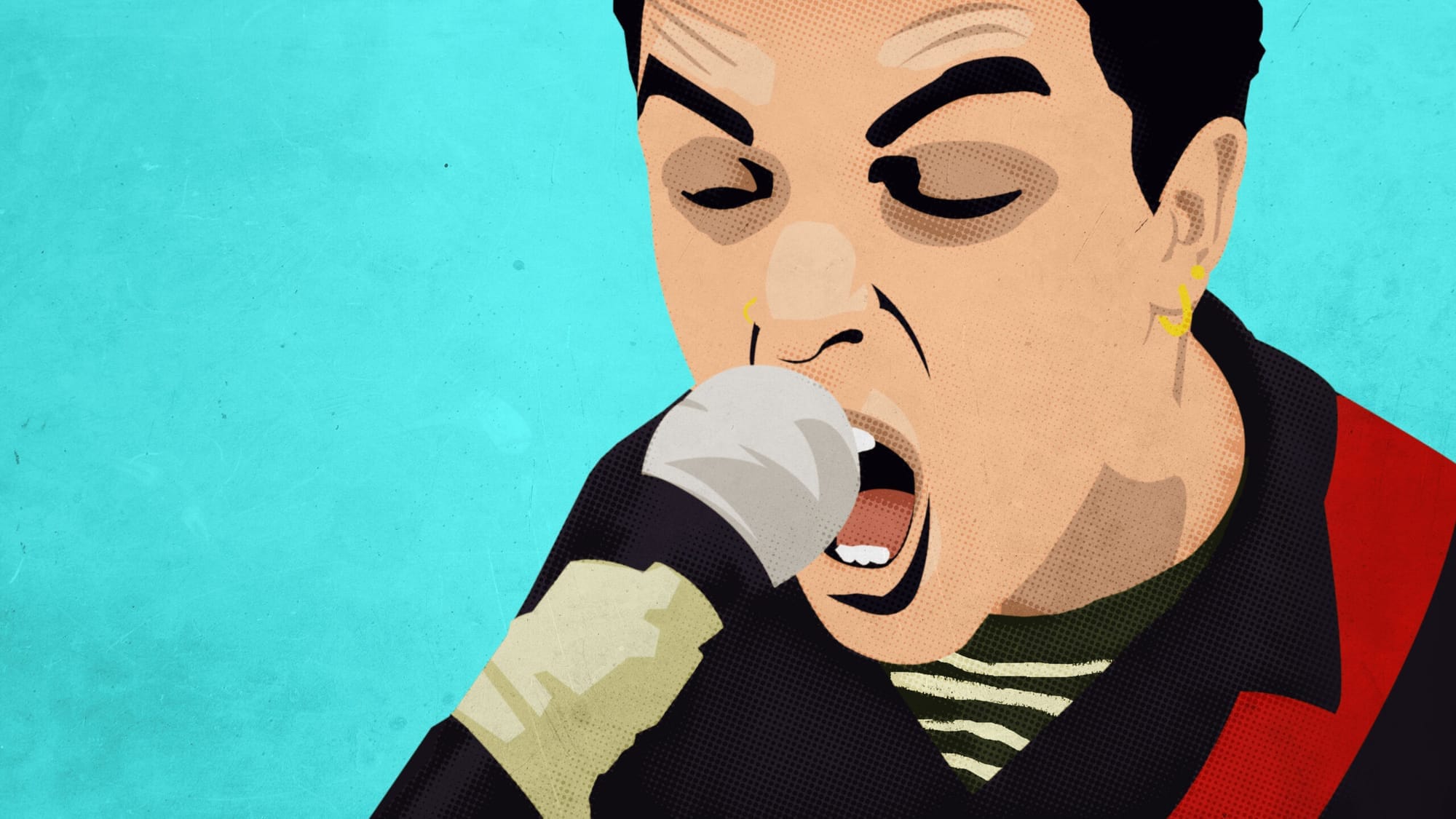
Dookie was everywhere. Its ubiquity as one of the few punk records to reach diamond status is as impressive as the sheer volume of oddities that litter its album cover — a micro-universe blown up by a recklessly deranged Snoopy caricature in an enormous mushroom cloud. In hindsight, Dookie was always too big to keep Green Day confined to their 924 Gilman St. beginnings. Its spill over into mass consciousness feels inevitable, like the waves of mud that swallowed the Woodstock ’94 stage. By now, the music videos are all burned into our retinas — the beat-up couch that explodes into feathers, the washed-out mental facility, the directionless late night stroll through BART stations and Berkeley, CA. For most of the 90s and early 00s Dookie was as inescapable as it was connective. The real surprise is that Dookie continues to reveal itself as one of the more vulnerable records of the 90s, lending itself to enduring appeal.
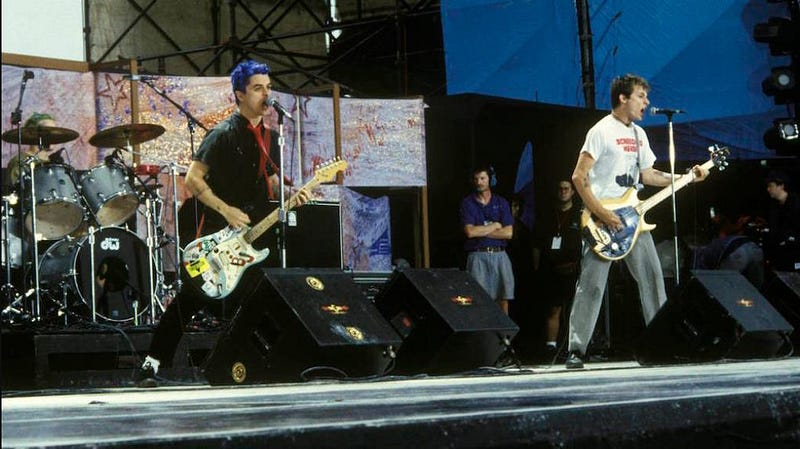
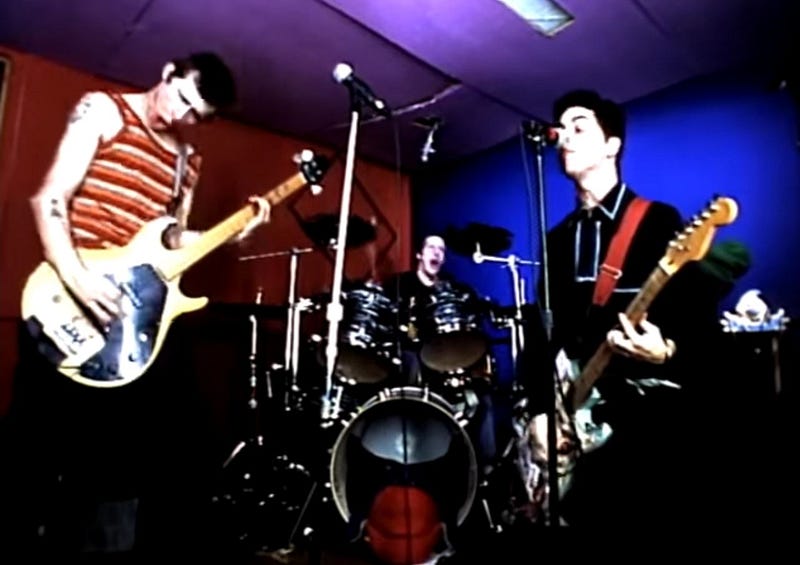
Of course, it starts with the music. After a three second drum fill, “Burnout” careens out of an airplane with self-destructive apathy, sand-blasted with stutter-stop drumming and big dumb distortion. It’s a perfect opening salvo. Billie Joe Armstrong, Mike Dirnt, and Tre Cool possess an elastic alchemy that combines the leanness of the Ramones and the crunch of Jawbreaker, blending it with Redbull and ingesting it nasally because of course they can. They carry this pace for close to 40 minutes, no skips. It’s astonishing to hear them keep their workman-like minimalism spontaneous and buoyant, as if someone assembled the tightest band on the planet but the players are all Looney Tunes. “Chump” and “F.O.D.” feature the revved up, nuclear noise that all punk bands tried to emulate in the 90s but with an effervescence that Green Day’s peers could never capture. “Pulling Teeth” is a little bit country, a little bit Cheap Trick, until you realize it’s a bloody valentine. There’s always a twist, walking contradictions that hold everything in half-assed balance. Call it anti-jazz — just when you think Cool can’t hit any more fills, Dirnt is pulling in listeners with loopy basslines that climb against Armstrong’s twitchy guitar, building towards a chorus that sounds like Paul McCartney on meth. Musical ideas are crammed in tight and hit hard on Dookie, even as the band plays fast and loose.
Yet it’s Armstrong’s raw and nervy observations, and his wildly dark humor, that give Dookie its soul. “Longview” is an extended session on the self-pleasure, and self-destruction, that comes from people pleasing (”My mother says to get a job / But she don’t like the one she’s got…”). “Welcome to Paradise” takes listeners on an extended tour of the East Bay, injecting the thrill of possibility into cracked streets and broken homes — a sort of “you don’t get to say you hate it unless you love it” meditation. Even when the last third of the album is locked in to the group’s signature four-chord groove, there’s still diversity of thought. Armstrong was more of a lover than a fighter, penning stories about the joys of wasting time together (“Sassafras Roots”) and coming to terms with his own sexuality (”Coming Clean”). Make no mistake, there’s real love in these songs: love in small moments, love in the face of catastrophes, love of stupidity, love when we aren’t sure people will come around, love when we don’t know whether to laugh or cry. On Dookie, sometimes it’s both. “She” bursts out of the gate with Mike Dirnt’s rubber band bass, swallowed by a wall of righteous rage as Armstrong sings: “Are you locked up in a world that’s been planned out for you? / Are you feeling like a social tool without a use? / Scream at me until my ears bleed / I’m taking heed just for you…” Love, in many ways, can feel impossible when we can’t protect those who matter most to us. Armstrong presents support as presence on “She” — that love can be an offering of quiet kindness while those we care for exorcise their demons.
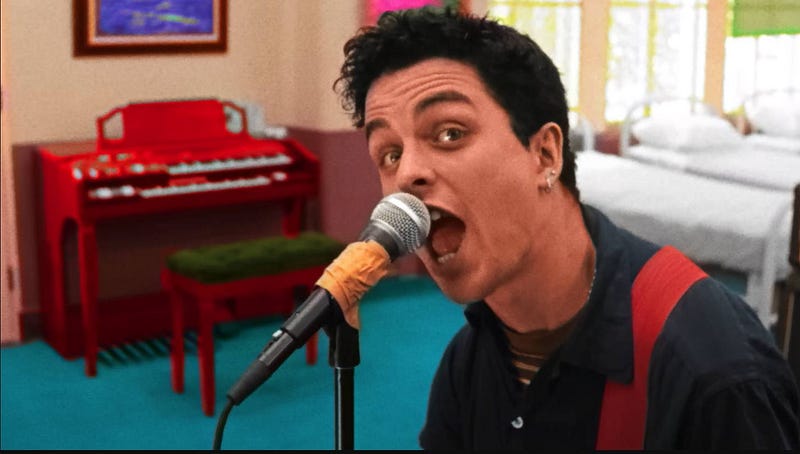
This is the understated genius of Dookie — that things are beyond broken but we can show up for each other regardless. The real challenge, of course, is showing up for ourselves. “Basket Case” finds Armstrong grappling with self-love when your body and brain betray you. The song builds from its iconic opening monologue, and palm muted frustration, into a bull rush of overdriven feelings and chainsaw riffs. Armstrong’s confessions are decidedly a lot, oscillating between self-doubt (“Sometimes I give myself the creeps / Sometimes my mind plays tricks on me…”) and nervous breakdown (“It all keeps adding up / I think I’m cracking up…”), before positing maybe all the melodrama and neurosis has a stupider explanation (“Am I just paranoid / Or am I just stoned?”). It’s well-documented that Green Day’s signature song is about Armstrong’s panic disorder but his lived experience is instantly relatable. You can’t help but sympathize with his anxiety as he seeks guidance from his therapist and various sex workers, and you are compelled to howl at the absurdity of his search when none of them have the answers. But of course, who does? By the time the spinning bridge comes around, Armstrong realizes the only person he can rely on to stop spiraling is himself (“Grasping to control / So I better hold on…”).
Again, the simplest explanations are often the stupidest ones. Despite the mess we find ourselves in, or because of it, there’s a lot of nonsense to be had in this lifetime but you’ll have more fun if you’re open to it and yourself. Ultimately, Dookie is an album about getting through life however you can — crying, laughing, or screaming. Sometimes, all at once. So you might as well turn it up, and hold on, because there is dookie everywhere.
Originally appears as part of a 1994 music retrospective, published by Michele Catalano on Going It Alone (2024). Republished January 10, 2025 on Medium.