2022
Everything in 2022 was more of everything else that came before it. This probably has something to do with living in a timeline where constraints are pushed to the margins. The conflation of self-care and convenience creates overwhelm, disguised as choices. Add the extra delivery stop. Sign up for another streaming service. Cosplay the spooky girl dance because we haven’t seen your version, and now, you too will be linked to the spooky girl lore. Thanks to being extremely online, all the time, everything is infinitely scalable. You will never run out of posts. The memes will never stop, regardless of whether they’ve got the juice. Opinions about the blue bird website will continue, in perpetuity, because we all feed the machine that feeds.
It’s hard to know what’s important in a time where everything iterates on itself. Pinpointing the essential can feel impossible when our conversations turn into checklists of things to track. If our present is measured by infinite overabundance, where you can have or be anything, it seems like the most important guiding focus comes from a sense of desire. In this way, desire presents a kind of personhood. You have to make a choice that excludes other choices. All of a sudden, there is a greater emphasis placed on how you interact with a limitless world. What we want becomes very revealing about who we are. It requires us to share something that’s harder to mimic because it exists outside the material world.
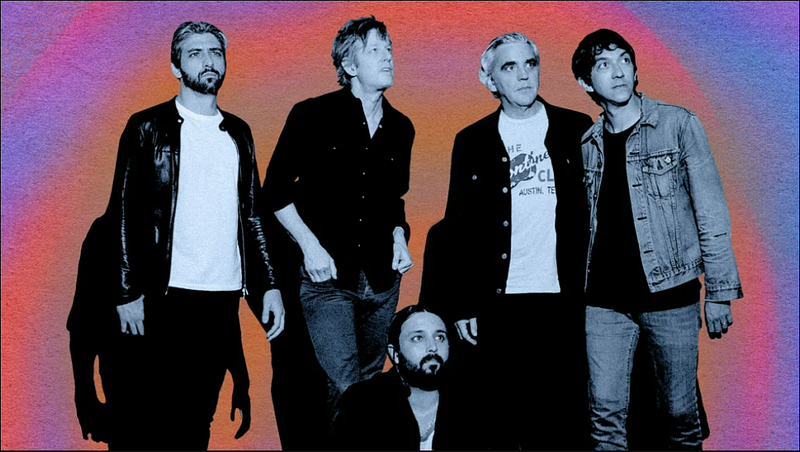
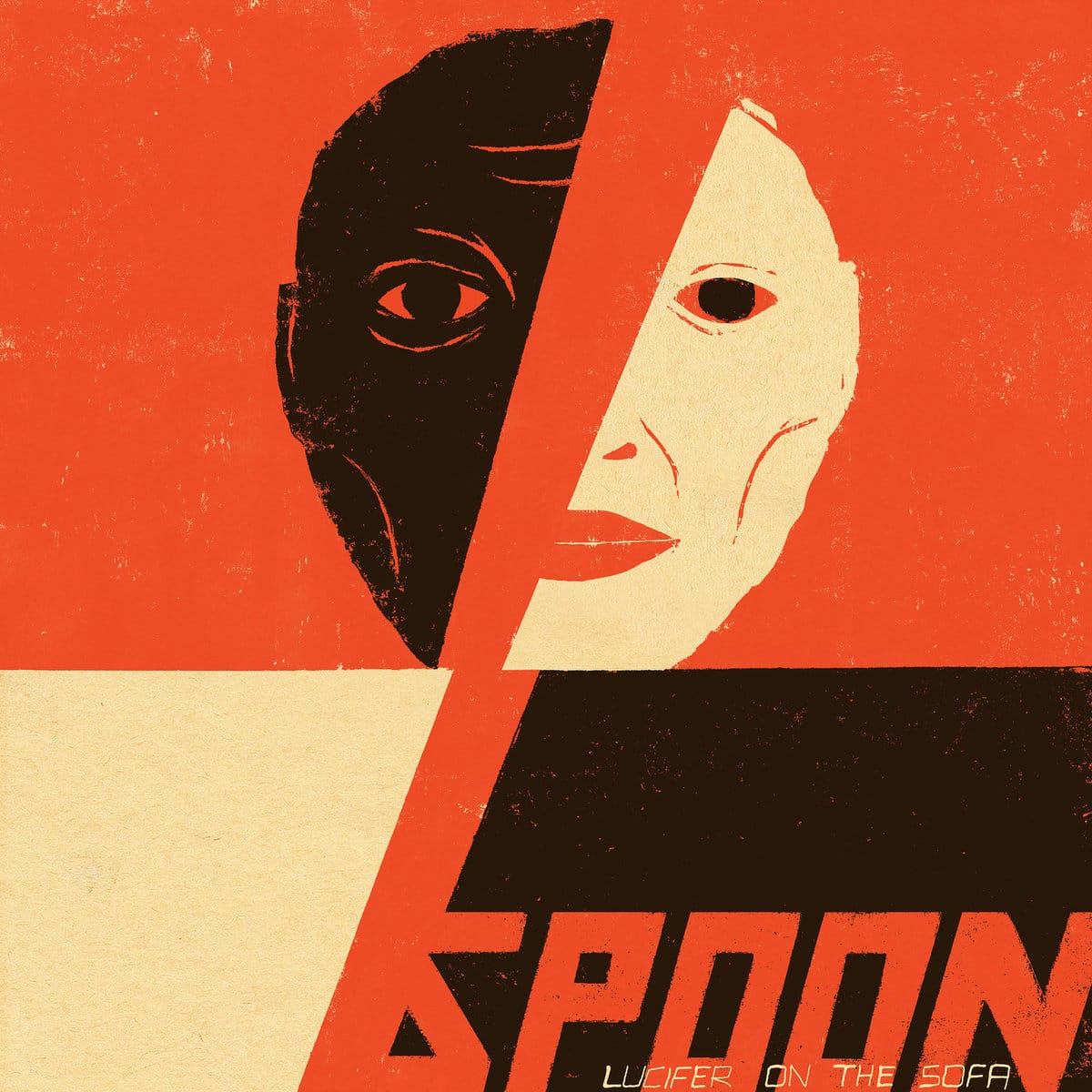
Lucifer on the Sofa, the tenth studio album from Spoon, is a meditation on the shapes and contours of desire. Across the album’s 10 tracks, the Austin band wrestles with the affirmations and consequences of wanting, and the ways in which it can constrict or untether our sense of self. What results is a looser Spoon album than 2017’s electronic-infused Hot Thoughts, or 2014’s late night confessional They Want My Soul. There’s a cool confidence at play as the band draws from past experiments with producer Dave Fridmann, while at the same time, channeling the spirits of Prince, David Bowie, and the lively blues of The Rolling Stones album Sticky Fingers. As a result, Lucifer plays out more warmly than Spoon’s preceding works, allowing a richer and vivid sentimentality to come into focus.
Lucifer opens with a cover of Smog’s “Held,” a song that explores the first kind of desire we experience as human beings: the want to be loved by someone other than ourselves. Against thunderous drums, quirked up blues licks, and Britt Daniel’s best Ric Flair impression, Spoon explore the vulnerability of surrender and how that brings us closer to someone than words ever could (“For the first time in my life / I let myself be held / Yeah / Like a big old / Baby / And I surrender / To your charity…”). As the song’s rubbery thump is enveloped by a wave of distortion and hard piano, what’s revealed is surrender to another validates a reciprocal connection. There’s an acknowledgement that we are worthy of compassion. There’s a reassurance that to want support, and to care for someone else, is an innate quality of our experience. Spoon explore how vulnerability underscores other facets of desire on Lucifer, but on “Held,” this takes on a primal quality that is core to our very being.
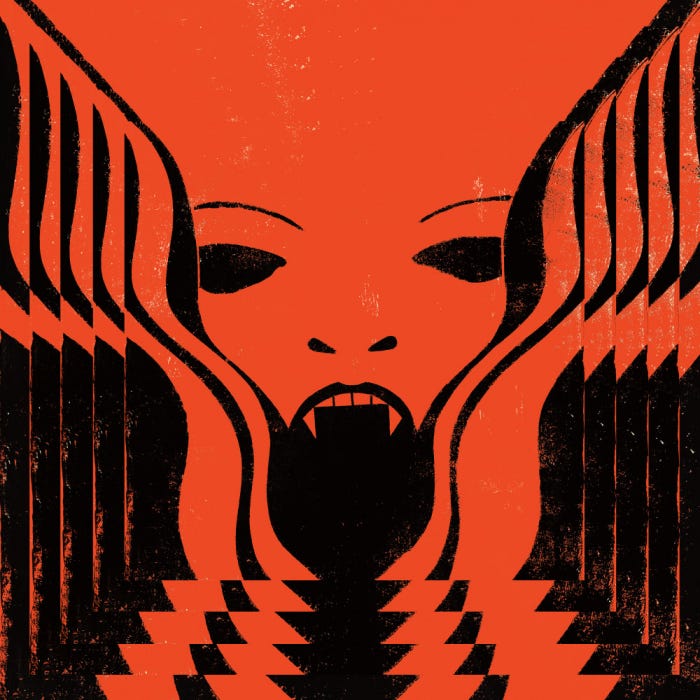
Including “Lucifer” in your album title is a deliberate choice. The myths and stories of the Morningstar vary across Christian theology but one constant throughout all representations is the sense of seduction. Lucifer is a character that presents options, not dogmas, one deeply rooted in the allure of possibilities. Spoon present this character in different ways on Lucifer, but one depiction manifests as the price of progress. How far is someone willing to go for what they want? Spoon first approach this topic on “The Hardest Cut,” a grimey riff session with spidery leads that wrestles with the pitfalls of blind devotion (“They’re saying you need a little protection / But following the leader gonna turn you off the religion…”). On “The Devil & Mister Jones,” Spoon employ shambling guitar and 60s-style, R&B brass to tell the classic tale of buyer’s remorse (“How did it happen? / How did it get this far? / How did it ever start? / And do you feel the same?”). “Jones” reads as revelatory, maybe even dire, but Daniel’s smooth delivery paints the cost, and consequences, as inevitable. Both songs capture how our desires shape us, and maybe, how no amount of validation mitigates the cost. Daniel cautions against following the leader, but also points out some truths cut deep, and you might not like what you see.
Perhaps in spite of this danger, or maybe because of it, another theme on Lucifer is the desire to find love in a tough world. “My Babe” captures this feeling as a late night torch song, where the spotlight rests firmly on Daniel’s worn, but sturdy, voice. Building from soft piano to big, zig-zagging guitars, “My Babe” describes a kind of romance worth fighting for, the kind of love you would die for (“Sign my name / Hold my breath / Sing my heart out / Beat my chest for / My babe / Let our hearts beat in time / Let the love go on and on now / My babe…”). Daniel illustrates the power of this revelation, how the pieces fall into place from late night TV, cheap wine, and a collection of stories and experiences that lead people to each other. The sum is always greater than the parts. Spoon aren’t the first band to write a love song, but as the track builds from midnight confessions to chest-pumping pride, they remind listeners how fast the whole thing can turn — that this kind of love has a way of arriving before you know it. At its core, “My Babe” is a reminder to sing your heart out once you’ve found your person, because after all, that kind of joy is worth celebrating.
While joy is one flavor of the human experience, over Lucifer’s second half Spoon contemplate the full tally of one’s cosmic ledger — how the choices and things we pursue transform our being. On the album’s closer and title track, Spoon invite us to face the accumulation of our choices as an ashen version of Lucifer sits beside us. The melancholic scene on “Lucifer on the Sofa” captures fragments of a life with weight and tread: old records, last cigarettes, relationships that crash powerfully and recede quietly. All of these faded memories replay in slow motion as Jim Eno’s brushed drumming evokes the lazy drift of cruising down the avenue, looking for something just out of reach. Horns bloom and fall like dead petals against a pulsing bass line, and we are left to wonder if the hunger was really worth it to end up at this place. The question is unanswerable but “Lucifer on the Sofa” reminds us that we are compelled to search for that meaning, and that our lives will ultimately keep the score, both in our bodies and within our surroundings.
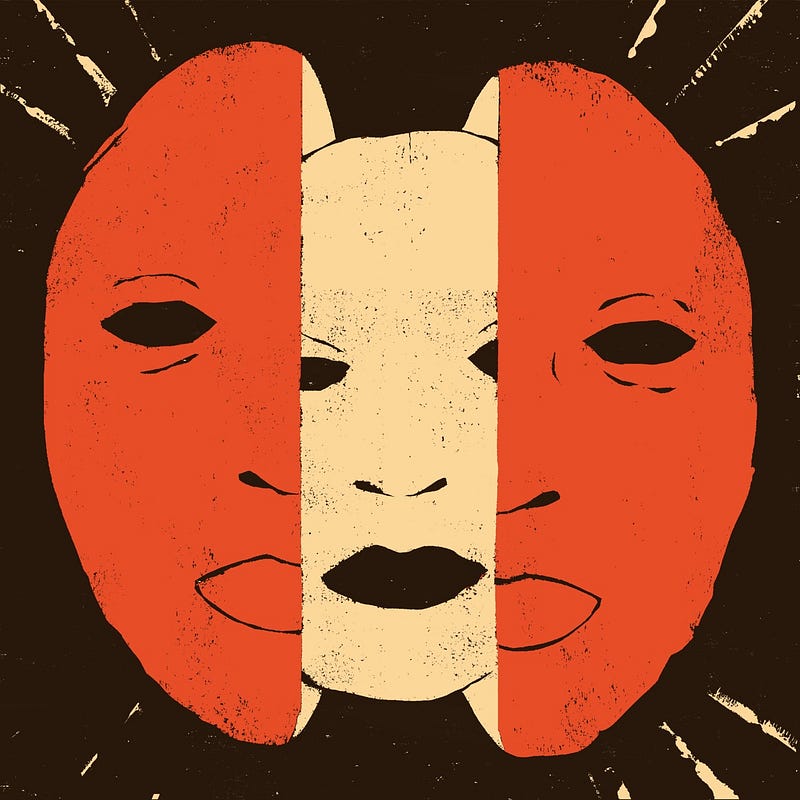
Where “Lucifer on the Sofa” waxes on where we’ve been, the late album highlight “Astral Jacket” shows us where we have arrived. Call it Spoon’s zen moment. Daniel reflects on cultivating gratitude for now as a deeply connective presence, maybe even a deeply spiritual one (“God walks into the room softly / You feel it when you hear that sound / Oh, God talks / Motions to you casually…”). Though they reference God, Spoon seem to be aiming for something bigger than Jesus. “Astral Jacket” is the only song on Lucifer without overwhelm, with no need to secure an empty kind of status. It eschews the compulsive aspects of desire for a kind of peace with the present. The song reminds us that what we need comes from within, that we contain multitudes. Alex Fischel’s soft Wurlitzer lends itself to a kind of suspended sprawl as Daniel’s acoustic strums carry us towards echoing drums in the distance. Through this dreamy reflection, Daniel shows us where true beauty rests:
Oh, and if you let it
In the blink of an eye
You can feel so fine
You can lose all track of time
There is no ego on “Astral Jacket,” just a quiet unfolding, a freedom from need that stretches to the stars and back if we’re willing to sit beside it, and ourselves, for a little while.
Perhaps that’s where Lucifer on the Sofa leaves its mark — through the tension of desire’s hunger for something authentic and the freedom that comes from accepting the abundance life has to offer. “Wild” may be the biggest song Spoon have written to date, certainly one of the most profound. The group takes a wide angle on “Astral Jacket’s” appreciation for the sublime present, blowing it out to stadium-sized proportions: stomping piano, climbing guitar, and a massive chorus about the power of starting small and dreaming big (“And the world / Still so wild / Called to me / I was lost / I’d been kept on my knees / And the world / Still so wild / Called to me…”). “Wild” captures an empowering wanderlust where every valley has a peak and the scaling is the point. Desire’s drive is present, but the song also captures the freedom that comes from taking the world all in, on its own terms, and trusting yourself to play the hand you’ve been dealt. “Wild” is a call to face what’s in front of you, honestly, without pretense, because the world can tear you down just as fast as it can build you up.

In a way, that’s the point. There’s a real power to honesty, with its ability to reframe the overwhelm of modern life into something manageable, maybe even exciting. Honesty is able to isolate what’s essential, what’s true, what’s actually important in a world that operates with inflated importance. In speaking with Apple Music about this album, it seems like Britt Daniel feels the same way:
“It’s just a rock ‘n’ roll record, and it’s a record that sounds to me like good times, for the most part.
We were more of a bar band then [in the ‘90s]. That’s all we were doing, rehearsing to play gigs at little bars or clubs in Austin. Playing as a band first and working the songs up together was a guiding principle for how the record turned out, with the spirit that it did.”
What makes Lucifer on the Sofa so compelling is its honesty. As a rock ‘n’ roll record, it’s unpretentious in construction, allowing the force of its conviction to reveal genuine truths. It’s direct and to the point. Purely, and uniquely, Spoon — a portrait of who they are in good times, and in the times they decided to reach for something better. It’s the kind of music they want to make, on their own terms, speaking to (and for) themselves. In this way, Spoon illuminate that honesty is always worth seeking, always worth wanting, because it ultimately reveals the most about the lives that we’re living.
In addition to Lucifer on the Sofa, here are my 30 favorite records from 2022:
- The 1975 | Being Funny in a Foreign Language (Dirty Hit)
- Alexisonfire | Otherness (Dine Alone)
- Bartees Strange | Farm To Table (4AD)
- Beach House | Once Twice Melody (Sub Pop)
- Blood Incantation | Timewave Zero (Century Media)
- Camp Trash | The Long Way, The Slow Way (Count Your Lucky Stars)
- Cloakroom | Dissolution Wave (Relapse)
- Confidence Man | Tilt (I Oh You)
- Danger Mouse & Black Thought | Cheat Codes (BMG)
- Death Cab for Cutie | Asphalt Meadows (Atlantic)
- Denzel Curry | Melt My Eyez See Your Future (PH Recordings / Loma Vista)
- Freddie Gibbs | $oul $old $eparately (Warner)
- Harry Styles | Harry’s House (Columbia)
- Joyce Manor | 40 oz. to Fresno (Asian Man)
- Kenny Beats | Louie (XL Recordings)
- No Devotion | No Oblivion (Velocity / Equal Vision)
- Orville Peck | Bronco (Columbia / Sub Pop)
- oso oso | Sore Thumb (Triple Crown)
- Pianos Become The Teeth | Drift (Epitaph)
- Pinkshift | Love Me Forever (Hopeless Records)
- Prince Daddy & The Hyena | Prince Daddy & The Hyena (Pure Noise Records)
- Pusha T | It’s Almost Dry (Def Jam / GOOD Music)
- Soul Glo | Diaspora Problems (Epitaph)
- Spoon | Lucifer on the Sofa (Matador)
- The Smile | A Light for Attracting Attention (XL Recordings)
- Tomberlin | I Don’t Know Who Needs to Hear This… (Saddle Creek)
- Vince Staples | Ramona Park Broke My Heart (Blacksmith / Motown)
- Warpaint | Radiate Like This (Virgin)
- Wild Pink | ILYSM (Royal Mountain)
- Yeah Yeah Yeahs | Cool It Down (Secretly Canadian)
Originally published February 1, 2023 on Medium.