2020
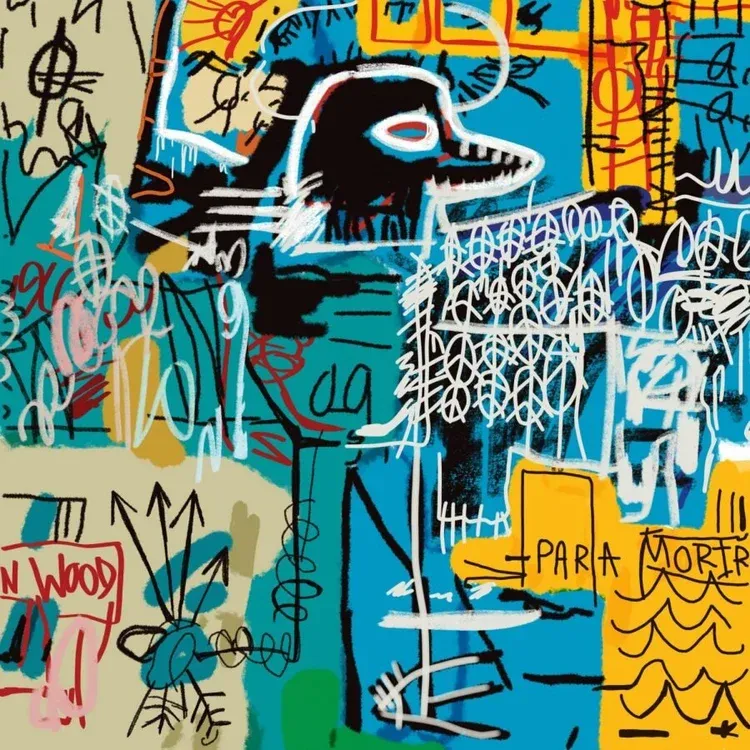
When the World Trade Center towers fell on September 11, 2001 it signaled the end of the American Exceptionalism myth for my generation, revealing the tendrils of American Imperialism that were always present but unspoken about for most of our lives. For a moment, however, it felt like the veil of “normalcy” was cast aside as we watched the American-led Endless War in new high definition, buoyed by a campaign of torture, mass surveillance, and faux-patriotism. The dissonance was jarring. The optimistic among us were quick to point out this was an aberration under George W. Bush, someone who was ill-equipped to lead and listened to the wrong men whilst carrying out atrocities abroad that didn’t really reflect our values. Of course, there was a big caveat — we’d been taught freedom matters at all costs and if you aren’t free, what are you? It was a profound kind of doublespeak to justify unthinkable acts of violence. We would later learn this could be repackaged as HOPE, under President Barack Obama, who merely extended the Endless War and gave us Mitt Romney’s healthcare plan.
This history is essential to consider as a through line to 2020, where Donald Trump (another ill-equipped, morally bankrupt President) has brought the Endless War’s animus home, waging it now against the American public itself. Trump’s chief innovation and legacy is his ruthless cruelty against our vulnerable communities, whether it be from his naked embrace of White Nationalism during a summer of protests against the Jim Crow culture of law enforcement, to the absolute neglect of Puerto Rico’s hurricane crisis, the abject greed fueling his self-enrichment, and a genocidal austerity employed during a global pandemic (an austerity that he has not practiced for himself in receiving the world’s most advanced medical treatment to battle his own COVID-19 diagnosis). Trump’s atrocities are well-documented but this chapter in our history birthed an awful refrain — this isn’t normal, nor should it be. And so, the American myth of greatness shattered once again; the song remains the same.
Oddly enough, another essential through line from 2001 to 2020 is The Strokes.
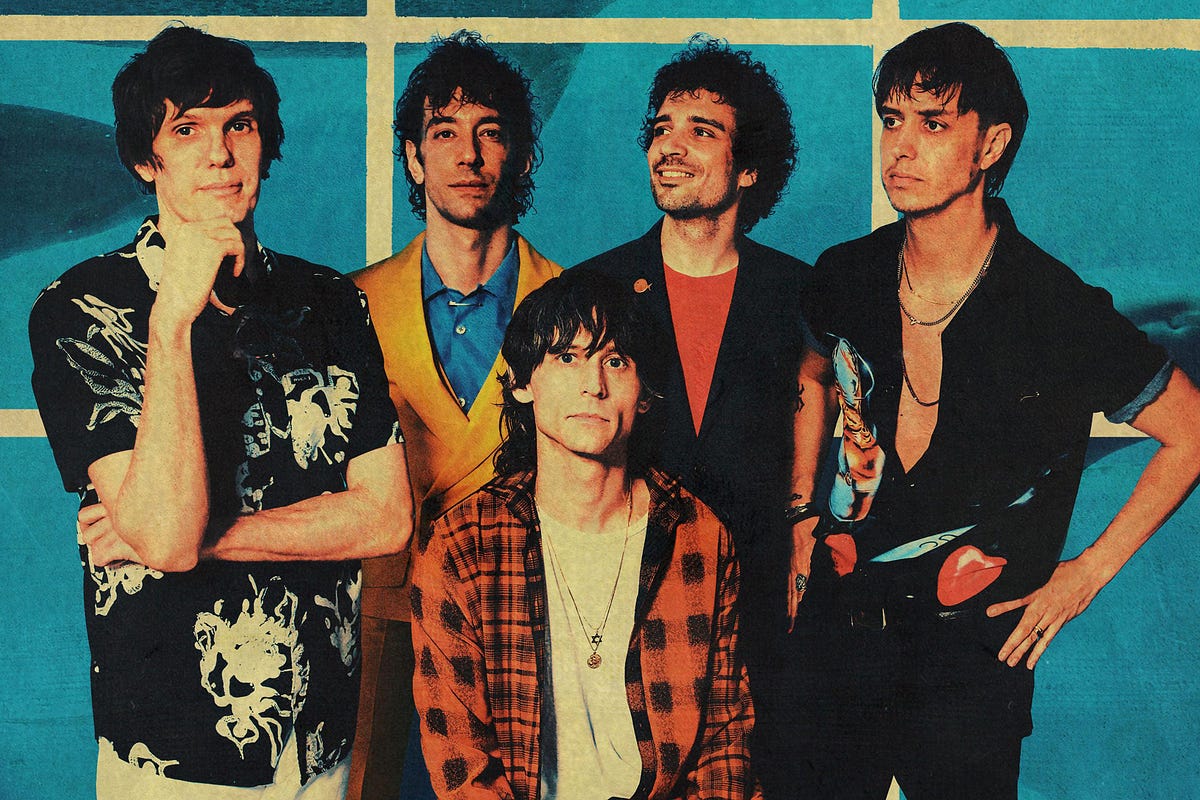
Is This It was released several months before the World Trade Center attacks but provided a kind of nihilistic, and exhausted soundtrack to the malaise of brutality as the old empire continued to tighten its grip. I was too young to really understand that kind of apathy as I started high school (I had more energy then), so it was much later in my life that Is This It’s combination of new wave, post-punk, and weariness finally hit me. In the midst of late nights, dust ups with New York City cops, and somber daydreams, the whole album really focuses on how the tension of keeping it all together is ultimately an empty and futile effort. Fitting, then, that in the middle of social and global unrest The Strokes released The New Abnormal, again waxing prophetic about the chaos of now as we watch the erosion of our systems and institutions accelerate at TikTok speeds. Central to this album is a variation on the same theme — is any of this worth saving or keeping together?
The answer seems to be YES but it’s a long road to get there. Where Is This It is focused on where to place ourselves in the middle of this thing called life, The New Abnormal is more reflexive between the personal and public, self-assuredly establishing the kind of “us v. them” dichotomy that felt all too real leading up to 2020. “The Adults Are Talking” tackles this out of the gate, establishing confrontational attitude that’s aided by persistent drum sequencing, a rubber band guitar dual between Albert Hammond Jr. and Nick Valensi, and Julian Casablancas’ white knuckled falsetto. The group vivisects blue chip stockholders of the class war, presenting instead the idea that the truth surrounding our circumstances is the most useful weapon against a society that rules under the veneer of “civility” and misinformation. Six albums into their career, their quiet confidence recognizes the absurdism of power consolidation at the expense of human connection, something all too real as 2020 dissolved the trappings modern life to expose these sordid truths about ourselves and the ruling class: the adults might be talking but they’ve got nothing to say and nothing to offer those coming after them.
Still, The Strokes are romantics and romantics need something to fight for, not just against. Much of The New Abnormal finds the group locked in their mid-tempo or ballad gear but the nice surprise is that the group can sustain that over 9 tightly constructed tracks. The Beatles by way of Television ballad “Selfless” is a sweet valentine in the album’s two spot, reflecting on the notion that carrying on for someone is the best revenge. The cheekier comedown of “Brooklyn Bridge to Chorus” sports a propulsive new wave keyboard bounce while lamenting the shortcomings of those we trust. As revealing as this past year has been, The Strokes want to make sure you know we’ve had the rug ripped out from under us — so much so they call out the song’s false break before bursting into another round of Britpop inspired guitar licks and slick keyboards.
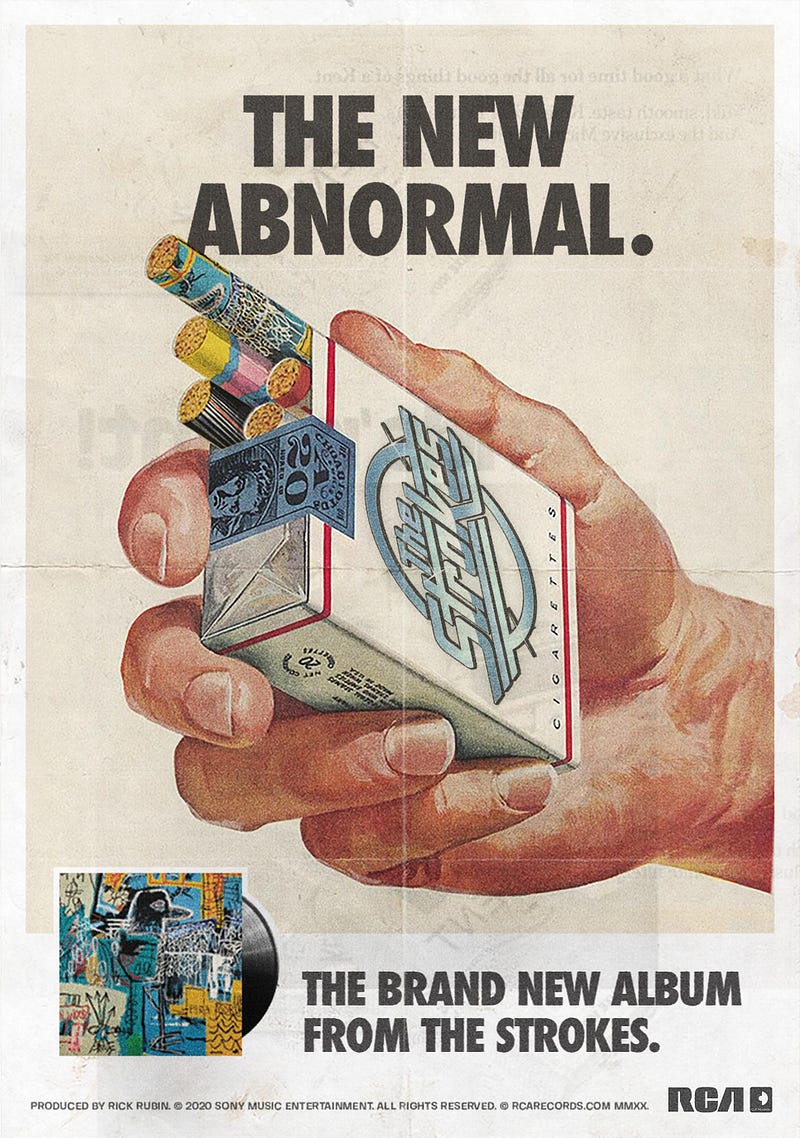
Surprisingly, with all the discussion of restraint that surrounds Rick Rubin’s essentialist production style, nothing about The New Abnormal is subtle. The line between pastiche and plagiarism is always thin when it comes to rock music but the unmistakable 80s jangle of “Bad Decisions” and the futuristic sci-fi lurch of “Eternal Summer” are so indebted to Generation X and The Psychedelic Furs that they necessitated co-writer credits. Wearing your influences that blatantly can draw unfavorable comparisons but The Strokes are savvy enough to give these melodies their own legs through sheer charisma. “Bad Decisions” oscillates between charging forward and feeling suspended in time, recalling the kind of wide scope frustration from the lustful “12:51” on Room on Fire but with an earnestness that replaces the group’s often curated affectations. “Eternal Summer” is the album’s midway masterpiece though, a simmering funk workout that employs extraterrestrial keyboards and twisting melodies, the hypnotic march providing Casablancas with a dubbed-out pulpit to rage about the psychedelic nature of reality like a combination of Prince and Roky Erickson. The result is a band taking the echoes of history and repurposing them for the urgency of now. As the pandemic has flattened time, what better way to illustrate the the dissolution of boundaries with a stomping, death-ray inspired freak out?
Casablanca’s time with his electro-rock side group The Voidz clearly influences The New Abnormal’s sonic range, maybe more so than his efforts on the 80s enamored Angles or Comedown Machine. It’s a palette that suits them though — The Strokes always operated more as a new wave/post-punk band than their classic rock, Velvet Underground hero-worship would indicate. On The New Abnormal, however, the songs are spacier, grander, less concerned about the tightness and tension that often comes with operating on the new wave spectrum. It probably took some prodding though. One can’t help but feel a song like “Eternal Summer” doesn’t exist without Rubin’s coaxing to dig deeper into some of those far-out impulses, the universe collapsing on itself into warped beatbox speakers as the song’s outro plays out. Rather than chase a “return to form” sound, the group is content to reveal their edges as evidenced by the “live in studio” snippets that pepper the album’s run time.
This theater of spontaneity pairs well with the earnestness of songs like “At the Door,” which is awash with majestic and glacial keyboards set against a neo-classical vocoder while Casablancas sings about the gut punch of all consuming anxiety. When The Strokes dropped “At the Door” in February of this year it was in conjunction with their comeback tour announcement. In true 2020 fashion, we never got that tour or what we wanted as far as a traditional redemption arc for the group (even if time has been kind to their late period output since First Impressions of Earth). But maybe we got what we needed instead — a meditative ballad on the nature of facing our deepest fears, to arm us against the darkest timeline.
If The Strokes were aiming for their prestige, then the true master stroke was taking these heady themes and tying them to very human experiences. “Why Are Sundays So Depressing?” and “Not The Same Anymore” both sound like cyborgs splitting the difference between Emotional Rescue era Rolling Stones and the mystique of The Doors. The one-two punch of these songs comes from the emotional heft though, with Casablancas ruminating over paths not taken, haunted by mistakes made. That’s one of the more interesting things to come out of The Strokes’ return. Rather than simply placing the blame towards others, as they might have on earlier records, the group seems to focus on the responsibilities of our choices, the consequences of such having profound impacts on our lives. In a way, it reaffirms the album’s core thoughts — nothing is normal about the paths we take. Nothing about this life is ordinary and some choices ensure that nothing will ever be the same, one moment to the next. Instead we should be asking: Where do we go when we are forced to reckon with the history that birthed our circumstances?
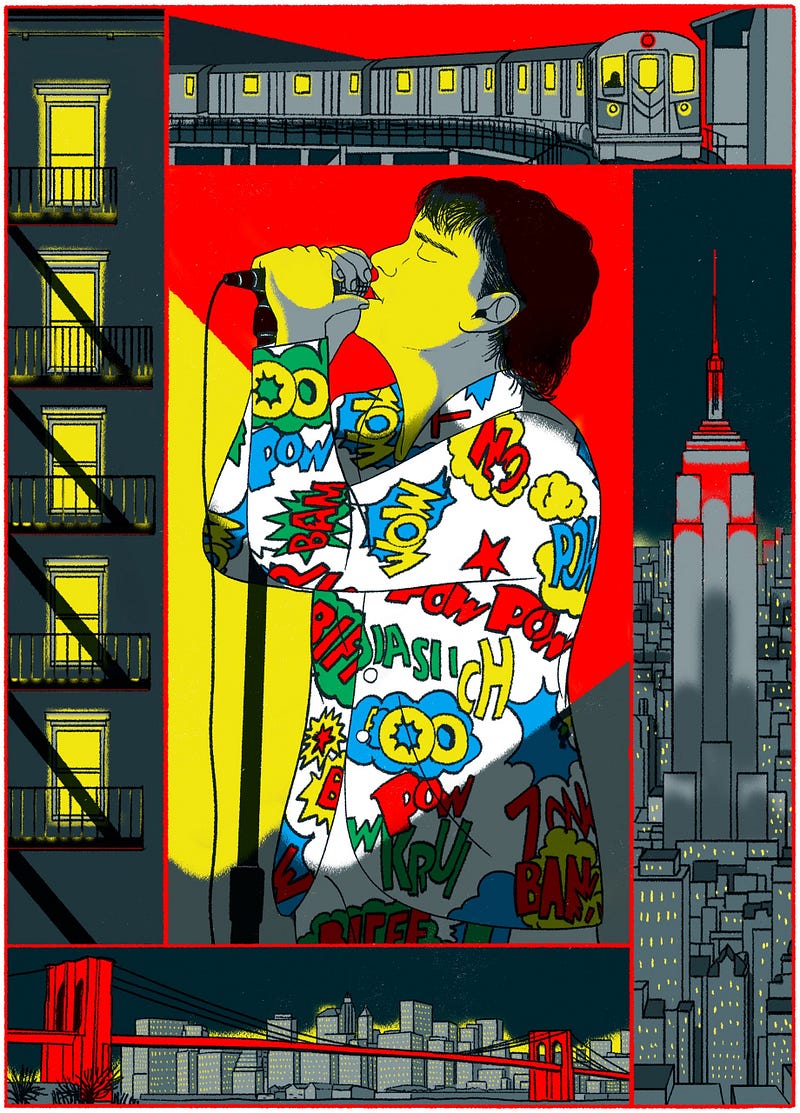
The New Abnormal closes with “Ode To The Mets,” a song attempting to reconcile the myth of American Exceptionalism, the long shot that wins it all through grit and individualism, with the very real erosion of the empire and the impermanence of all things. It’s not an accident that the bad-luck Mets serve as a metaphor for perpetual disappointment — maybe it’s The Strokes telling us chasing the myth of American Exceptionalism is actively making us insane, about as crazy as Mets fans. The track builds from minimal synthesizers and sweeping strings into shuffling back beat (“Drums please, Fab.”) that crescendos into a towering wave of descending guitars, anchored by Nikolai Fraiture’s watery bass work. At the center of it all is Casablancas walking us through the shadow of the valley of death like a post-Apoclyptic Dean Martin, closing out the final New Years Eve party at the edge of the galaxy. The song and its climate catastrophe-related music video remind us that everything ends — myths, stories, and even empires like the United States. Time’s march is inevitable and to resist that is a fool’s errand. The loud cacophony of our lives will some day be swallowed by the ocean and the dull roar of galactic silence.
But “Ode To The Mets” also reminds us that what we do now has very real consequences for those we encounter in this lifetime. The “new” abnormal can’t just be about a regime change to preserve a dying empire and Endless War under Joe Biden. There has to be more to the time we spend together because this moment matters, regardless of the timeline’s eventual end point. That should galvanize us to fight for something larger than ourselves, to protect those among us who are most vulnerable because the old systems and structures have never worked for all of us (as evidenced by the last 20+ years of American leadership). Casablancas said it best in the song’s closing outro (“Gone now are the old times…the only thing that’s left is us…”), the message clear as Rome burns: What matters most is what happens now and how we treat each other in the face of adversity. Let’s hope we can learn the same lesson before The Strokes play us out one last time in 2040, because as weird as everything is and will be, this is it.
In addition to The New Abnormal, here are my 30 favorite records from 2020:
- The 1975 | Notes on a Conditional Form (Dirty Hit/Polydor)
- Bartees Strange | Live Forever (Memory Music)
- Bing & Ruth | Species (4AD)
- Charli XCX | how i’m feeling now (Atlantic/Asylum)
- Conway the Machine | From King To A GOD (Griselda)
- Deftones | Ohms (Reprise)
- Dogleg | Melee (Triple Crown)
- Dua Lipa | Future Nostalgia (Dua Lipa/Warner)
- Fiona Apple | Fetch The Bolt Cutters (Epic/Sony)
- Fleet Foxes | Shore (Anti-)
- Freddie Gibbs & The Alchemist | Alfredo (ESGN/ALC/Empire)
- Gulfer | Gulfer (Topshelf)
- HAIM | Women in Music Pt. III (Haim/Columbia)
- Hot Mulligan | You’ll Be Fine (No Sleep)
- Hum | Inlet (Earth Analog)
- illuminati hotties | FREE I.H: This is Not The One You Have Been Waiting For (Illuminati Hotties)
- Into It. Over It. | Figure (Triple Crown)
- Jeff Rosenstock | NO DREAM (Polyvinyl)
- Knxwledge | 1988 (Stones Throw)
- Logic | No Pressure (Visionary/Def Jam)
- Mac Miller | Circles (Warner)
- Mrs. Piss | Self-Surgery (Sargent House)
- Nine Inch Nails | Ghosts V: Together (The Null Corporation)
- Nothing | The Great Dismal (Relapse)
- Phoebe Bridgers | Punisher (Dead Oceans)
- Run The Jewels | RTJ4 (Jewel Runners LLC)
- The Strokes | The New Abnormal (Cult/RCA)
- Touché Amoré | Lament (Epitaph)
- weave | The Sound II (weave)
- Wolf Parade | Thin Mind (Sub Pop)
Originally published December 27, 2020 on Medium.