2017
Lately, I've been noticing that we're stuck between two competing narratives of how to view our lives.
The first view is of a life that is precious or finite, an imperfect spark set against the backdrop of an infinite void. This, of course, is the "life is short" school, so get busy living or you'll miss it all before you can eat, pray, love your way to a late night epiphany. You typically hear about this one from self-help personalities, the clergy, and people that are too perky before your morning cup of coffee. The second view is of a life that grinds on our souls, where we are crushed by the burdens of modern living, the politics of belonging, and struggle to remain disciplined in the face of our darkest selves. You may be familiar of this school of thought from turning on your phone, every fight you've had with a loved one, and the endless parade of nightmares oozing out of the White House (which I hear they are renaming Castle Wolfenstein in the near future). This is the school people can't wait to leave, so we get blasted on cheap beer and a cauldron of other vices to block out the cruelty of its instruction, ultimately finding ourselves wasted and resentful.
The urge to dive into either of these perspectives on life can leave us hollow and spent. The effort to balance the two often seems impossibly foolish. No matter how you look at it, existing is exhausting. No one seems to have it down and people have been living for a long time, several millennia in fact. Sometimes, it's nice to be reminded that we're all still figuring it out, whatever "it" might be.
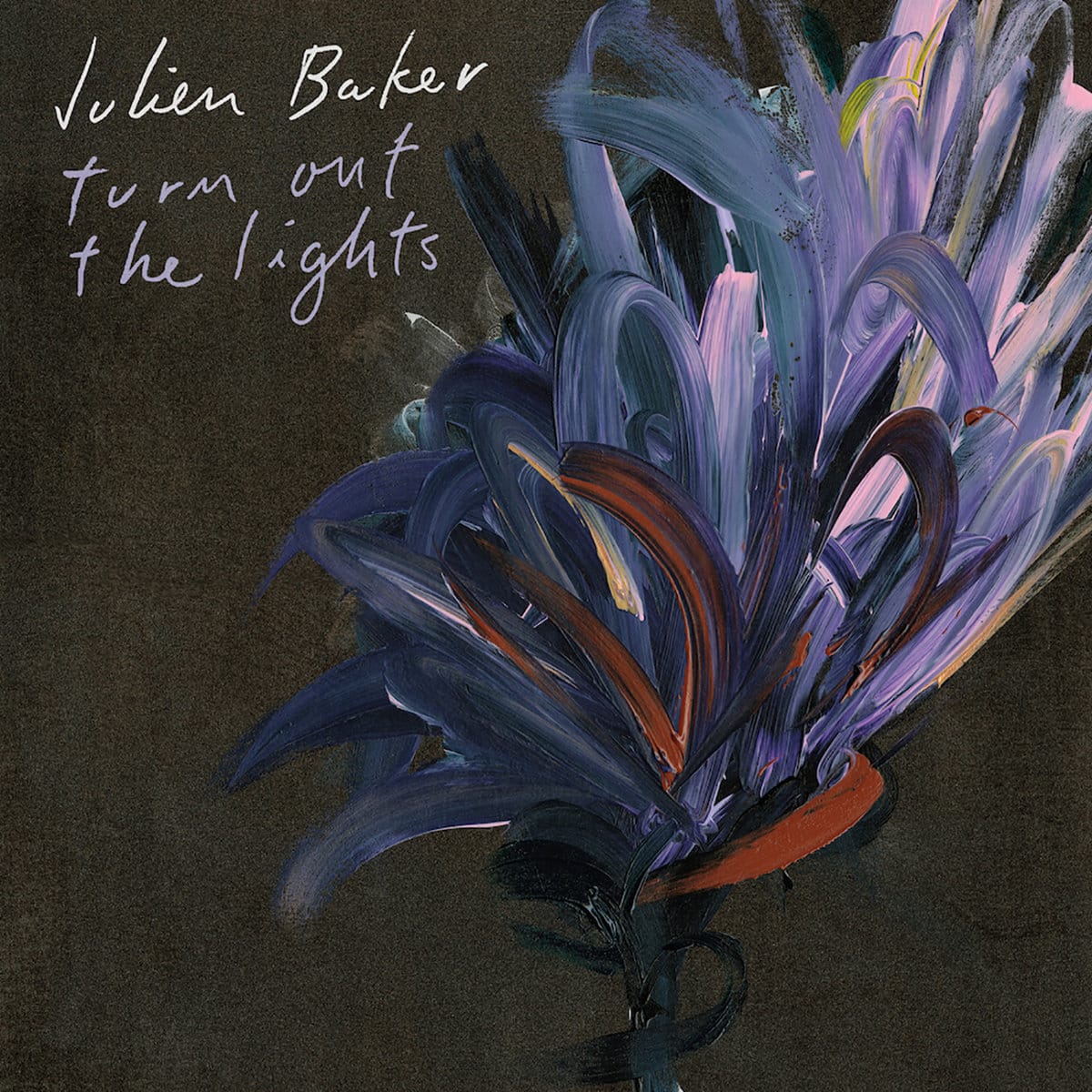
Julien Baker seems to understand the tension of living between and in these perspectives, so much so that these ruminations are front and center on her latest album, Turn Out The Lights. Against twinkling guitars and leaden piano, Baker's sophomore album explores how these concepts ebb and flow throughout her own life, opting to confront these contradictory views on living for her own sanity. For Baker, it appears there's little value in running from this binary. She casts off her guilt surrounding this tension on the album's title track, which builds from clean reverb and partially whispered vocals as it tackles the paralysis of choice (”There's a hole in the drywall still not fixed / I just haven't gotten around to it / And besides I'm starting to get used to the gaps…”). The song continues to glow before erupting into wall of blinding static as Baker's voice cuts through, reminding us that choice between our actions can be illusory and meaningless if we lose sight of ourselves in the process ("When I turn out the lights / There's no one left / Between myself and me…"). In other words, the truth about ourselves is likely somewhere in the middle of the binaries we struggle with. This makes sense when we consider that we can only know ourselves in the quiet moments of solitude that punctuate our lives. Baker understands this point well and spends the album's 10 tracks meditating on this tenant.
Baker’s approach to split infinity is unsurprising when you consider her life. It's wrapped in contradiction. She self-identifies as gay and Christian. Her stature is diminutive but her voice crashes like an endless wave. She's worked through addiction but doesn't speak about it from the vantage of an ivory tower. There's a humility in her honesty, and rather than retreat to the confessional intimacy of her debut (Sprained Ankle), Baker embraces these contradictions to reach for things that can connect us as human beings. Often, the lyrics on Turn Out The Lights ring with the pang of experience. She addresses the selfish motives and judgments that often coincide from fixing ourselves and others on the organ soaked "Televangelist" ("Am I a masochist / Screaming televangelist / Clutching my crucifix / Of white noise and static / All my prayers are just apologies / Hold out a flare until you come for me / Do I turn into light if I burn alive…"). Elsewhere, the gossamer guitar work of "Shadowboxing" provides a twisting backdrop for Baker to wrestle with the toll of contrition while finding a way to forgive her imperfections ("Tell me that I shouldn't blame myself / But you can't even imagine how badly it hurts / Just to think sometimes / How I think almost all the time…").
I've read reviews of this album suggesting that these are songs that you "feel" rather than listen to and I think that's apt. The most overwhelming quality of Turn Out The Lights is its fearlessness, of being okay with the relative lack of knowledge or security in this world. That's because growth, or the will reach for change, requires hope as a basic element of that transformation. Hope sustains us through struggle, through dissonance. Hope is intoxicating, you feel it in your bones and chest. Yet hope, as Baker finds out, is often in short supply, as scarce as it is important.
Nevertheless, she persists.
Rather than remain in one static state of mind, Baker chooses a middle path to explore what it means to act on that hope, to possess the courage to transform into the type of person we want to be. For this reason, Baker spends a vast majority of Turn Out The Lights reminding herself and the audience about the essentialism of hope in the face of perceived futility, whether its on the double-tracked vocals of "Appointments" ("Maybe it's all gonna turn out all right / And I know that it's not, but I have to believe that it is…"), or the porcelain gospel and shimmering strings of "Everything That Helps You Sleep" ("So could you hear from heaven on earth / If I scream a little louder / I know you would have heard / Say there's no way I could be further / If I scream a little louder I know you would have heard it…"). Nowhere is this more prevalent than on the acoustic dirge "Even," where Baker recognizes hope comes from having the bravery to reconcile our worst actions and perspectives ("Cause all you ever say is / "What's the point; is anybody there to help me now" / It's not that I think I'm good / I know that I'm evil / I guess I was trying to even it out…"). In a way, "Even" finds Baker providing indie's version of the Litany Against Fear--even if you believe the worst about yourself, life is a process that is in constant flux and the only way through is through. Default conceptions of the right way, or correct perspective, muddy the waters and lead to feedback loops. We have time to grow, to change, to hope we can be better than where we are now. We might as well use the time we have to reconcile the inherent contradictions about how to live our lives.
The end of 2017 seems like a pretty good time for that sentiment.
Baker's songs may not be effervescent affairs but there is a kinetic quality that allows them to soar past occupying a kind of monochromatic melancholia. Part of that stems from her ability to tap into universal struggles, rather than preaching from narrow fact patterns. Instead of diary-like confessions, Turn Out The Lights reaches for growth, for understanding past our personal traumas or the categorical labels that provide surface level insight of who we might be. In many ways, Baker's album chronicles how she's learned to love herself in the moment, no strings attached, since there are plenty of other things to worry about this world. This is resoundingly clear on the album's closing track "Claws In Your Back," where Baker's piano climbs alongside her soaring voice:
I'm better off learning
How to be
Living with demons I've
Mistaken for saints
If you keep it between us
I think they're the same
I think I can love
The sickness you made
'Cause I take it all back, I change my mind
I wanted to stay
When I think of the strength we need to balance the competing narratives of our lives, I think of the courage to stay, to hang on past the point where we think we should give up. No matter how we label the world or how the world labels us, we have one life. We can choose to change. We can hope. It is our right to. Turn Out The Lights shows us how Julien Baker has chosen hope in this world . It's the kind of album that will continue to provide that hope for years to come, no matter the circumstances we find ourselves in because everyone will still be figuring it out long after Julien Baker and I leave this planet. This album speaks plainly, with the intention that everyone is in a different place, trying to make sense of a world that is, in fact senseless.
Put another way, Baker's album calls on us to avoid walking through life blinded and overwhelmed. Turn Out The Lights challenges us to turn off our distractions, to laydown our baggage, our trauma, our fears, and look inward at our ability to simply be present and to be okay with who we are right now as we continue to work on ourselves. The truth about our lives will reveal itself through the quiet personal practice of living out each day. Meaning will come from confronting life's separate contradictions, by walking the middle path between everything, especially when it hurts, and even when hope is in short supply. And it's going to take time--maybe even our whole lives.
It is for these reasons that the quiet eloquence of Turn Out The Lights is something that will stay with me for a very long time.
In addition to Turn Our The Lights, here are my other favorite releases from 2017:
- Alex Lahey | I Love You Like A Brother (Nicky Boy Records)
- Beck | Colors (Fonograf Records / Capitol)
- Bleachers | Gone Now (RCA)
- Bonobo | Migration (Ninja Tune)
- The Bronx | The Bronx (V) (ATO Records)
- Cigarettes After Sex | Cigarettes After Sex (Partisan)
- Converge | The Dusk In Us (Epitaph / Deathwish)
- Death From Above 1979 | Outrage! Is Now (Last Gang)
- Father John Misty | Pure Comedy (Bella Union / Sub Pop)
- Feist | Pleasure (Universal)
- Fleet Foxes | Crack-Up (Nonesuch)
- Glassjaw | Material Control (N/A)
- Hundreth | RARE (Hopeless)
- Japanese Breakfast | Soft Sounds From Another Planet
- Julien Baker | Turn Out The Lights (Matador)
- Kendrick Lamar | DAMN. (Top Dawg / Aftermath / Interscope)
- Manchester Orchestra | A Black Mile To The Surface (Loma Vista)
- Migos | Culture (Quality Control Music / 300 Entertainment / Atlantic Records)
- The National | Sleep Well Beast (4AD)
- Phoebe Bridgers | Stranger in the Alps (Dead Oceans)
- Power Trip | Nightmare Logic (Southern Lord)
- Queens of the Stone Age | Villains (Matador)
- Royal Blood | How Did We Get So Dark? (Warner Brothers)
- Rozwell Kid | Precious Art (SideOneDummy)
- Sorority Noise | You're Not As _____ As You Think (Triple Crown)
- Spoon | Hot Thoughts (Matador)
- St. Vincent | MASSEDUCATION (Loma Vista)
- Vince Staples | Big Fish Theory (Blacksmith / Def Jam)
- Waxahatchee | Out In The Storm (Merge)
- Wear Your Wounds | WYW / Dunedevil (Deathwish)
Originally published December 28, 2017 on Tumblr.